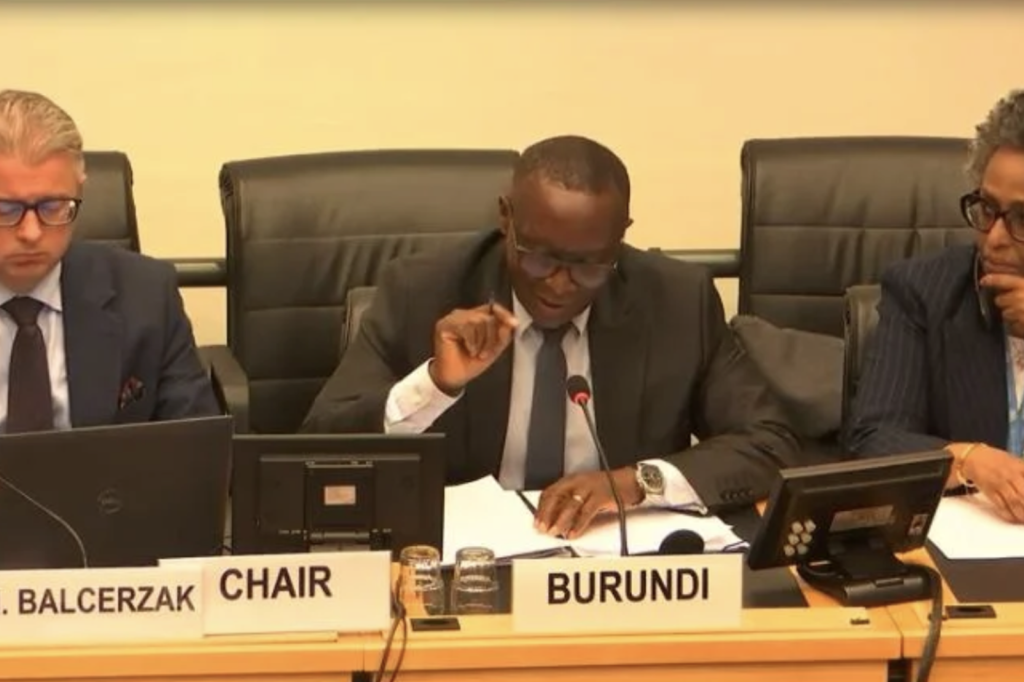

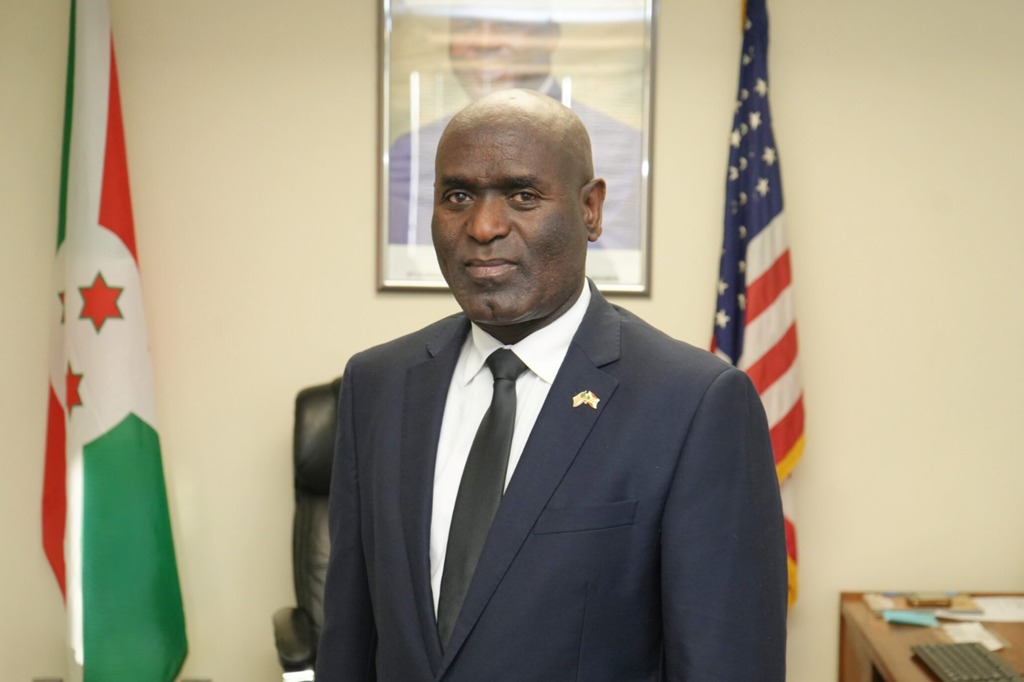
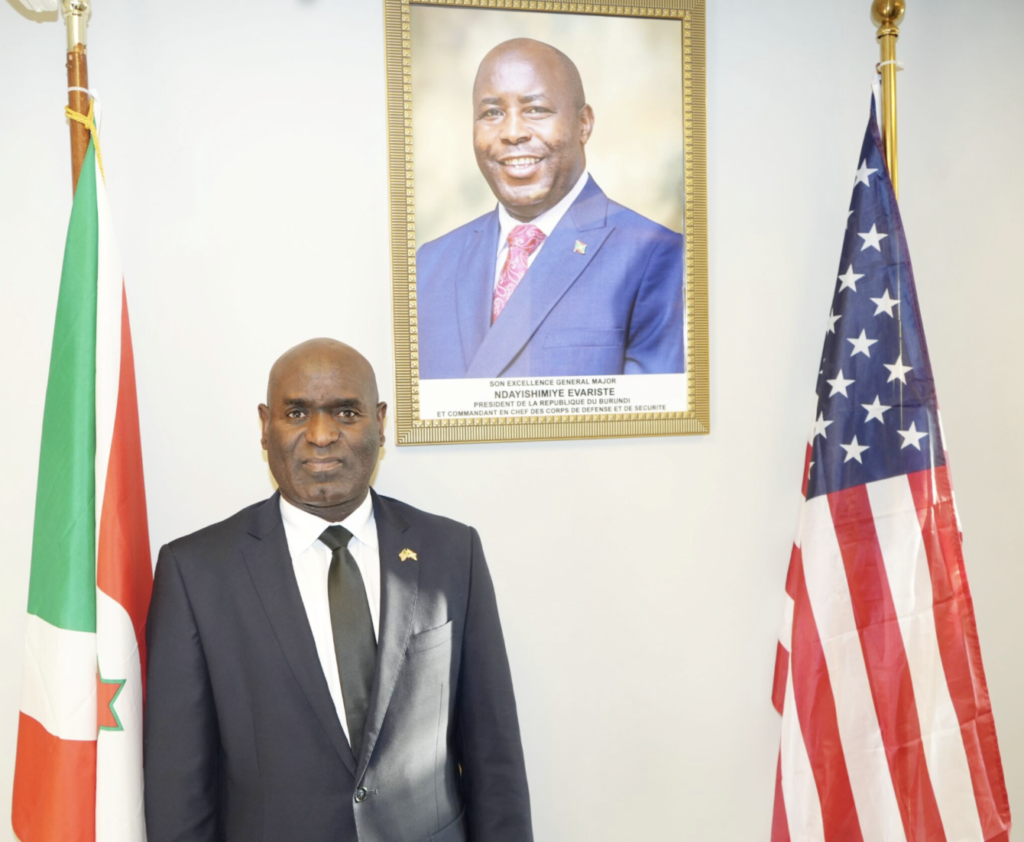
H.E. Ambassador Jean Bosco BAREGE arrived in Washington with a diplomatic background shaped by regional service and senior public responsibilities. Before presenting his credentials in February 2024, he served as Burundi’s ambassador to Uganda and Kenya and held key roles including Deputy Chief of State Protocol at the Presidency and Chief of Staff at the ministry responsible for East African Community Affairs. His work has focused on regional cooperation, institutional coordination, and strengthening Burundi’s international partnerships.
In this conversation, Ambassador BAREGE discusses his priorities for advancing Burundi–United States relations through trade, cultural exchange, academic collaboration, and regional cooperation. Drawing on experience across East Africa, he speaks about the role of trust in diplomacy, identifies opportunities for investment and youth engagement, and shares plans to introduce Burundian cultural heritage to American audiences. The discussion follows the themes explored throughout the interview and offers a clear view of how Burundi seeks to deepen practical cooperation while expanding its global outreach.
Ambassador Barege, since presenting your credentials in 2024, what has become your clearest priority for Burundi–U.S. relations, and why does it matter at this moment?
Since presenting my credentials on Feb 27th, 2024, my clearest priority has been to send a consistent and unmistakable message to the United States: Burundi is open, ready, and committed to strengthening our bilateral partnership across trade, Technology political cooperation, Defense and Social Cooperation.
This priority matters now more than ever. Burundi and the United States share more than 60 years of diplomatic relations, dating back to 1962, and today we are entering a moment where our interests align in a particularly strategic way. Under President Ndayishimiye’s vision and Burundi’s national agenda to become a developed nation by 2060, we are pursuing economic transformation, regional stability, and deeper integration into global markets. To achieve this, the United States remains one of our closest and most essential partners.
At the same time, the current U.S. Administration is focused on strengthening national security by securing reliable supply chains for rare earth minerals. Burundi can play a crucial role in this effort. We have opened our doors to create a special corridor for U.S. engagement, ensuring transparent, secure, and mutually beneficial cooperation in the mineral sector. This aligns closely with President Trump’s emphasis on “Trade, not Aid,” and positions Burundi as a stable, dependable partner in East Africa.
Furthermore, Burundi’s political stability and its strategic position central position in the Great Lakes region create an opportunity for the United States to expand trade and investment in a region undergoing major transformation. The newly developing railway connecting Burundi, Tanzania, and the Democratic Republic of Congo will open a strategic trade route that enhances U.S. access to East and Central Africa.
Ultimately, a stronger U.S.–Burundi partnership today can elevate regional security, economic growth, and defense cooperation in ways that benefit both nations and contribute to long-term stability in the Great Lakes region.
You have expressed interest in bringing a Burundian cultural group to the United States. Beyond the performances themselves, what deeper story about Burundi do you want American audiences to take away, and what doors do you hope this cultural exchange will open, whether in tourism, education, or broader cooperation?
When I speak about bringing a Burundian cultural group to the United States, I want American audiences to experience something deeper than a performance. I want them to feel the heartbeat of Burundi itself. Our traditional drumming recognized by UNESCO as Intangible World Heritage is not just music. It is the rhythm of our identity, the sound of unity, resilience, and joy. When Americans hear those drums, I want them to feel that Burundi is a nation with a living, breathing cultural soul. Cultural diplomacy is one of the most powerful ways people can connect. Music, tradition, and art speak a universal language. Through this exchange, I want Americans to see Burundi not only as a partner in diplomacy, but as a country with a rich heritage, warm people, and a story worth knowing.
Beyond the performances, I hope this cultural exchange opens new doors. In tourism, Burundi is emerging as one of Africa’s hidden gems home to the true source of the Nile River, world-class tea and coffee, the serene shores of Lake Tanganyika, the blue ridges of our mountains, and the wildlife of Kibira, Rusizi, Kigwena and Ruvubu National Park. These are experiences that can inspire travelers, adventurers, and storytellers.
In education, Burundi is working to elevate its technology and innovation sectors. The United States can play a transformative role in supporting this growth, while Burundi offers strengths in language proficiency, mathematics, and engineering. We are open to student exchanges, academic partnerships, and programs that diversify and strengthen our education system.
Ultimately, this cultural exchange is not just about showcasing Burundi it is about building bridges. It is about creating new pathways for cooperation in tourism, education, investment, and people-to-people understanding. When Americans hear our drums, I want them to hear an invitation: come discover Burundi, partner with Burundi, and grow with Burundi.
For American entrepreneurs who may be unfamiliar with Burundi, which sectors offer the most realistic entry points today, and what practical first step would you advise them to take?
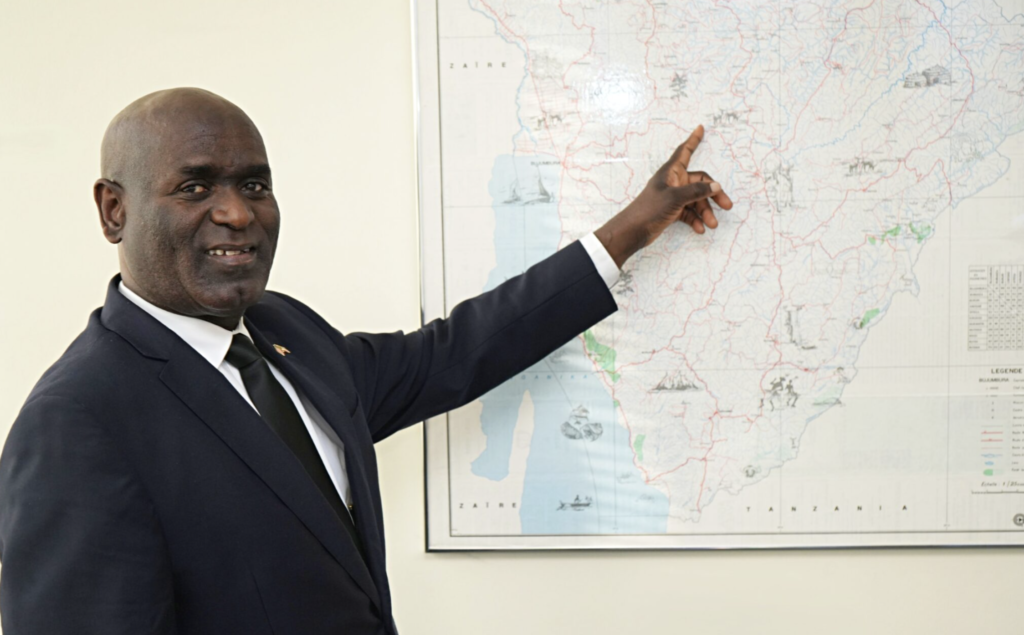
Burundi is wide open for trade, and we have recently changed our laws to make it easier for entrepreneurs, innovators, and investors to thrive in our economy while securing strong returns on their investments. These reforms now allow investors to establish their businesses in a matter of days. We have also created special programs such as the Public–Private Partnership (PPP) framework, which serves as a fast-track corridor that helps investors bypass unnecessary delays and long vetting procedures, enabling them to work directly with the relevant public or private sectors. In short, Burundi welcomes investors in all sectors and has built a business environment designed to support them from day one.
What is one misconception about Burundi’s investment climate that you encounter often in Washington, and how are you working to change that narrative?
One misconception I often encounter in Washington is the belief that Burundi’s investment climate is difficult or unpredictable. Since the beginning of my tenure in D.C., I have met many entrepreneurs and investors, and I have been able to guide them through the process smoothly, proving that Burundi can accommodate any type of investor with professionalism and care. A clear example is Anzana Electric Group Ltd. With its PPP Waza Power, which recently established its project, bringing millions of dollars into Burundi without obstacles or delays. And they are not alone several American companies are already launching projects in Burundi, even if I will not name them here. The reality is simple: Burundi is open, the environment is improving every day, and this is the right moment for American investors to enter and secure some of the highest returns in the region.
How do you see the Burundian Diaspora in the United States contributing to national development beyond remittances, particularly through skills transfer, mentorship, or entrepreneurship?
The Burundian diaspora in the United States is a tight knit, highly professional community, and their contribution to national development goes far beyond remittances. They have consistently served as a backbone for the country, not only through financial support but also through their skills, networks, and leadership. Burundi has a very young population, and our priority is to make this generation more skilled and globally competitive. In this effort, the diaspora plays a crucial role whether through mentorship, knowledge transfer, or entrepreneurship. We encourage skill mobility in a responsible and structured way, ensuring that Burundians abroad can share their expertise while helping build capacity at home. Their engagement is essential to shaping the Burundi of tomorrow.
During your tenure, what kinds of academic or youth partnerships between Burundi and U.S. institutions would you most like to help bring to life?
During my tenure, one of my priorities has been building meaningful academic and youth partnerships between Burundi and U.S. institutions, and we have already made important progress. We have partnered with several educational agencies, institutions, and American universities to connect them with Burundian universities for student exchanges, joint programs, and e-learning opportunities. A good example is our collaboration with the Krach Institute, which has helped open new avenues for digital learning and academic cooperation. These partnerships are essential for expanding opportunities for Burundian youth, strengthening our higher-education system, and ensuring that our young population gains the global skills needed to contribute to Burundi’s development.
Burundi sits at an important crossroads in East Africa. Where do you believe your country can contribute most constructively to regional cooperation and stability?
Burundi has maintained good diplomacy, strong governance, and stable
political relationships across East Africa, and our geographic position bordering Tanzania, the DRC, and Rwanda places us at the heart of regional dynamics. Because of this, Burundi is in a crucial position to contribute constructively to cooperation and stability. We are fully committed to supporting regional peace efforts, strengthening cross-border security, and promoting dialogue among our neighbors. Our stability at home allows us to play a responsible role in advancing collective security, economic integration, and long-term peace in the Great Lakes region.
Drawing on your service in Uganda, Kenya, and now the United States, what do you believe truly sustains lasting international partnerships: policy alignment, economic opportunity, cultural connection, or trust built over time?
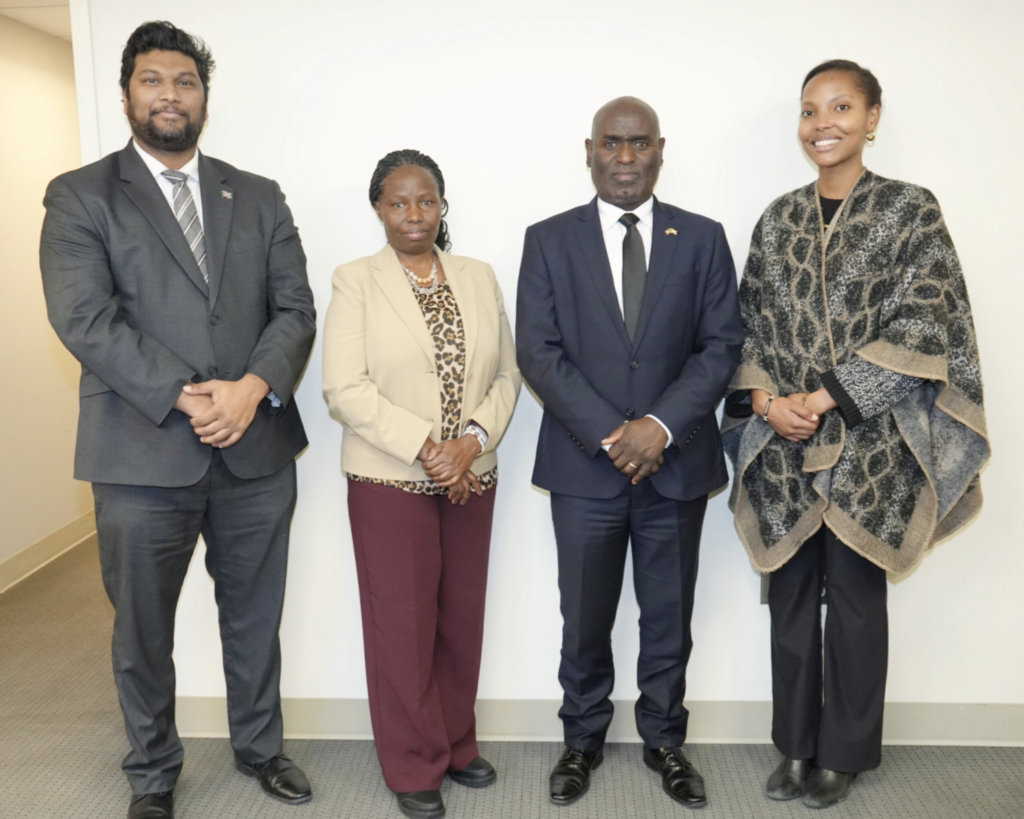
Drawing on my service in Uganda, Kenya, and now the United States, I have learned that lasting international partnerships are ultimately sustained by trust built over time. Policy alignment and economic opportunity are important, and cultural connection helps people understand one another, but none of these endure without trust. In every posting, I have seen that when countries trust each other when they communicate openly, honor commitments, and show consistency cooperation becomes natural. That is the approach I bring to Burundi’s diplomacy today: building confidence step by step, demonstrating reliability, and showing our partners that Burundi is committed to long-term, constructive engagement.
Finally, when your posting in Washington comes to an end, what would success look like in simple terms for Burundian families at home and for Americans who have engaged with your country?
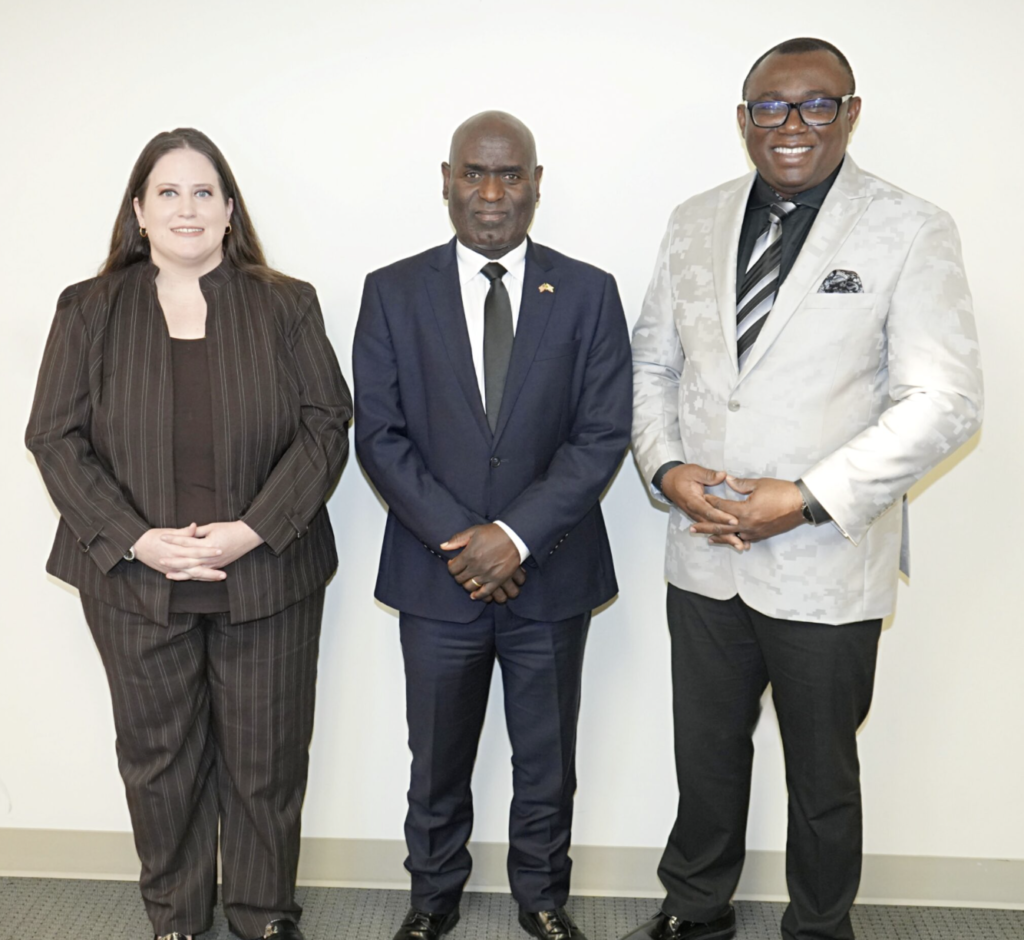
When my posting in Washington comes to an end, success for me would be very simple: that Burundian families at home feel the benefits of stronger ties with the United States, and that Americans who engaged with Burundi walk away with a clearer understanding of who we are. I completed my major on my thesis in American Literature, so I understand American culture, traditions, and how Americans think. At the same time, I am a proud and humble Burundian who knows the heartbeat of my people. My mission here has been to rebuild and strengthen the bridge between our two nations so that we can thrive together in mutual, practical, and respectful partnership through cultural exchange, trade, education, and social cooperation. We value the United States as one of our closest partner, and my goal is to ensure that this relationship is understood, appreciated, and carried forward with confidence on both sides.
READ MORE HERE: